
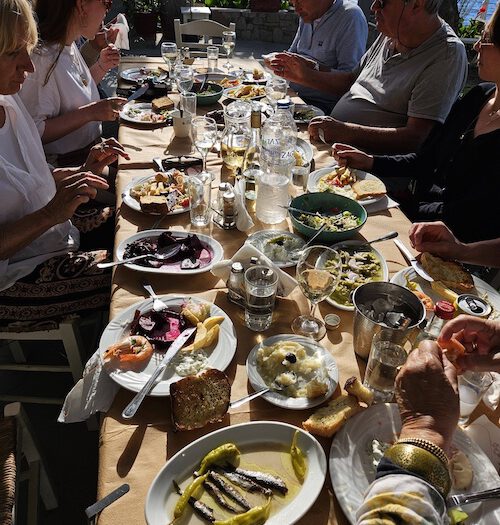
(Dinner at Avlaki)
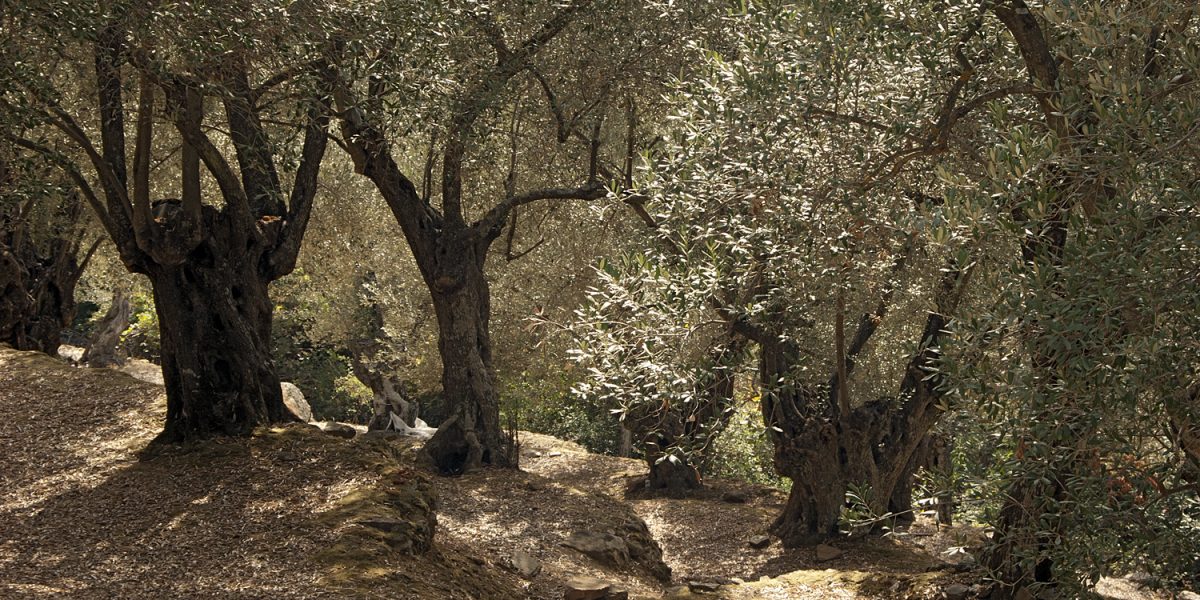
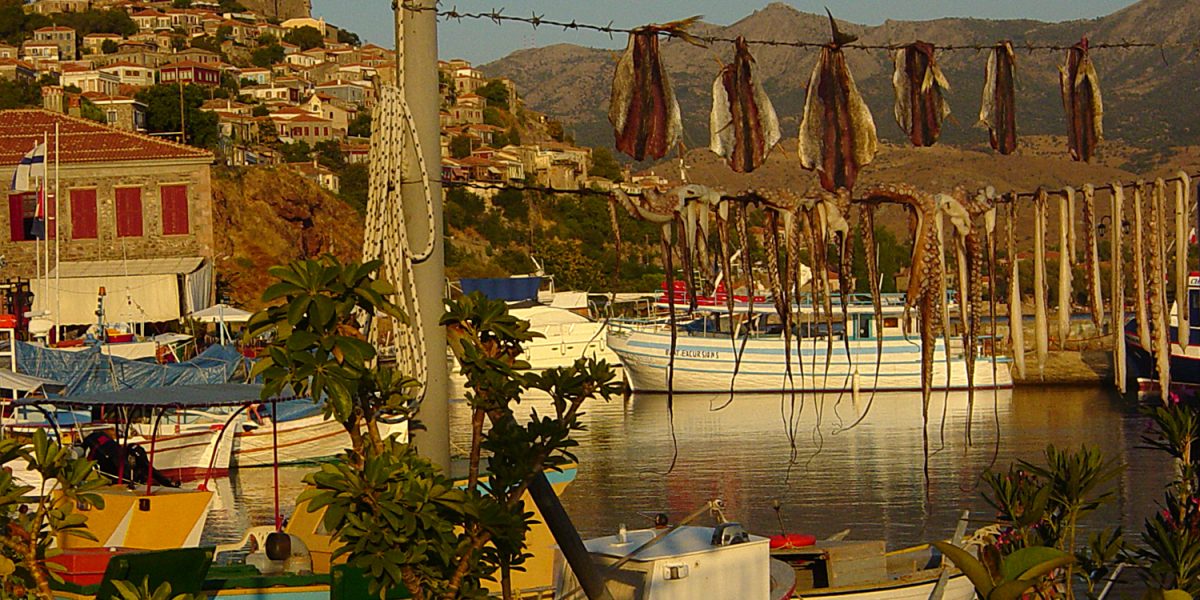
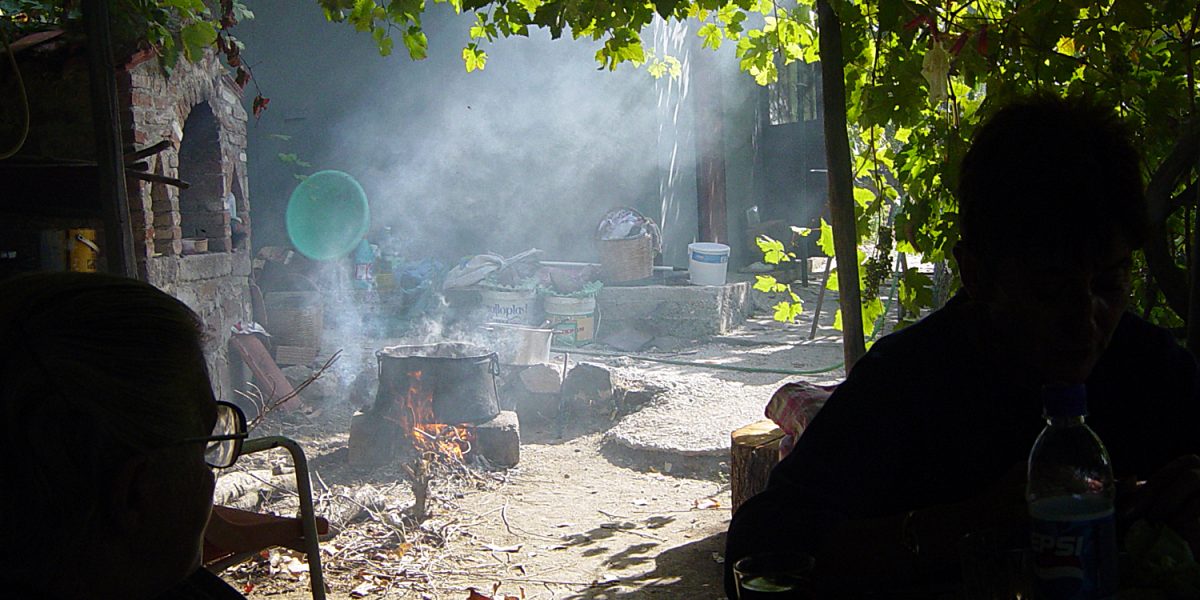
Life on Lesvos revolves around food: harvesting olives, pickling them, pressing them for oil, picking and drying figs, gathering vegetables, picking fruit from the trees, making jam or other sweets, and producing wine. Homemade pickled capers or olives, dried figs, walnuts, and oranges, they appear throughout the year in various dishes. Lesvos is a rich island in terms of food, even though the habit of gathering food in nature is threatened by the power of the supermarkets. With the arrival of tourism, more and more residents are also abandoning their fields, as it is easier to make money in the tourist sector.
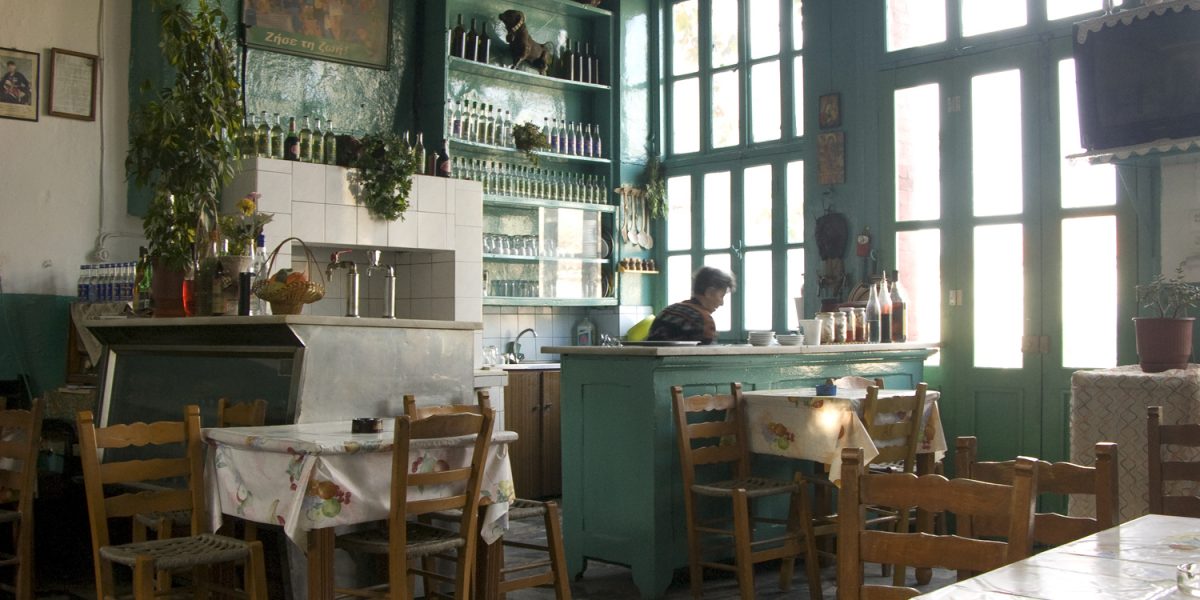
However, that is not the reason why more and more restaurants are closing for the winter. Especially on Lesvos, you need to know which places still serve food. The euro is to blame for that, along with the Greek crisis, which drove prices up to such an extent that many Greek families can no longer afford to eat out, especially not with the entire family, from grandparents to the newest members. About 20 years ago, it was very common to encounter a noisy, cheerful group at long tables, laden with platters of food and bottles of water, ouzo, and wine. Eating, singing, dancing, it was regularly a boisterous mess, winter or summer. An entire culture sent to the dogs.
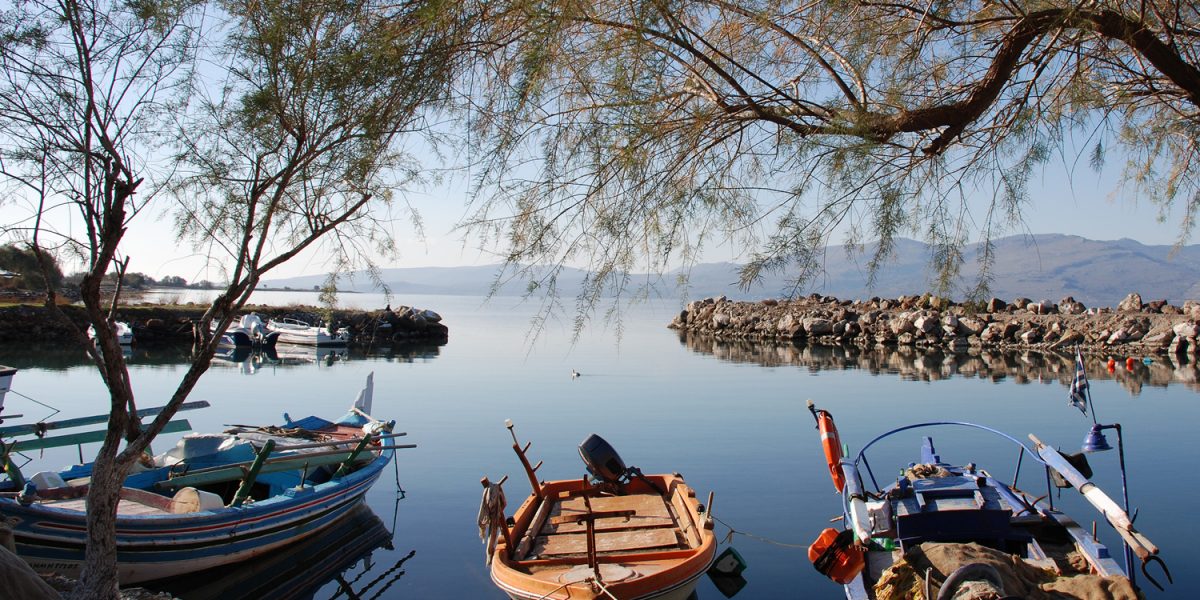
I love going out to eat in good company, and I know where to go in the winter. Usually combined with walks, you might, for example end up at the square in Eresos at Kostas (MeZen), where you can enjoy a lunch while being entertained by the village traffic passing by. With a bit of luck, you can bask in the winter sun on the terrace of kafenion Lenas, in the deserted but charming village of Pterounda, where delicious pots of drunken pork and the famous sausage dish spetsofai are served. Platanos in Yeni Limani is also usually open in the winter, where you can get ‘mountains’ of french fries and delicious fish, just like at Meltemi in Skamnioudi, which serves delicious chick peas and other vegetables. Panayotti in Avlaki is always open, even though you sometimes have to wait for the cook. A purring heater or a cheerful winter sun contributes to the tasty dishes and there are the beautiful views across the sea to Rabbit Island and Molyvos.
Summer is wanting to make its entrance, but King Winter keeps juggling with clouds, showers and drops of temperature. Along with the arrival of the first tourists, most restaurants are now open, meaning for me that choices to enjoy food are bigger. But just now, an offensive has started in my lungs against my esophagus. At least that’s how I imagine it, because I have to eat a lot less to keep everything down.
The first sardelles pastès at the charming fish restaurant on the beach of Kagia: I could have devoured an entire plate and had a hard time restraining myself. I ended up having more than three, and I couldn’t resist the other food either. Food for the tumor and then I went home feeling pretty nauseous.
Finally we can eat again in the charming Eftalou, where To Votsalo has opened its doors in the former domain of Manolis. I would have preferred to try everything, but a simple cough is a warning of what might come, so I resignedly take a sip of ouzo. The tumors seem immune to ouzo, so at least I can still drink what I want.
I no longer dare to order a super hamburger at Misirlou in Molyvos, and I will also have to leave the table at Caravan in Petra fairly empty, and I have had to watch disappointedly as my dining companions devoured an original zucchini salad by the beautiful Bay of Gera.
It is definitely a Tantalus torment. To see the table in Limanaki in Molyvos harbour filled with the most delicious dishes, of which I can only taste a little, if I don’t want to allow the advance of the tumor’s offensive. This is also true in Sigri, where the best orange salad on the island is served at Cavo Doro, along with spicy mussels. When chef Vivi is present with her quirky sushi, I will get into even more trouble: I really can’t live on just one sushi.
But I don’t want to complain and won’t let those tumors defeat me so easily. I can still eat, taste, and savour, while the ouzo keeps flowing. Just as important as the food is the company with whom I share the meal and the place where the feasting takes place. In quiet village squares, in harbours, or on a beach by the gently lapping blue sea. Life is still delightful.