
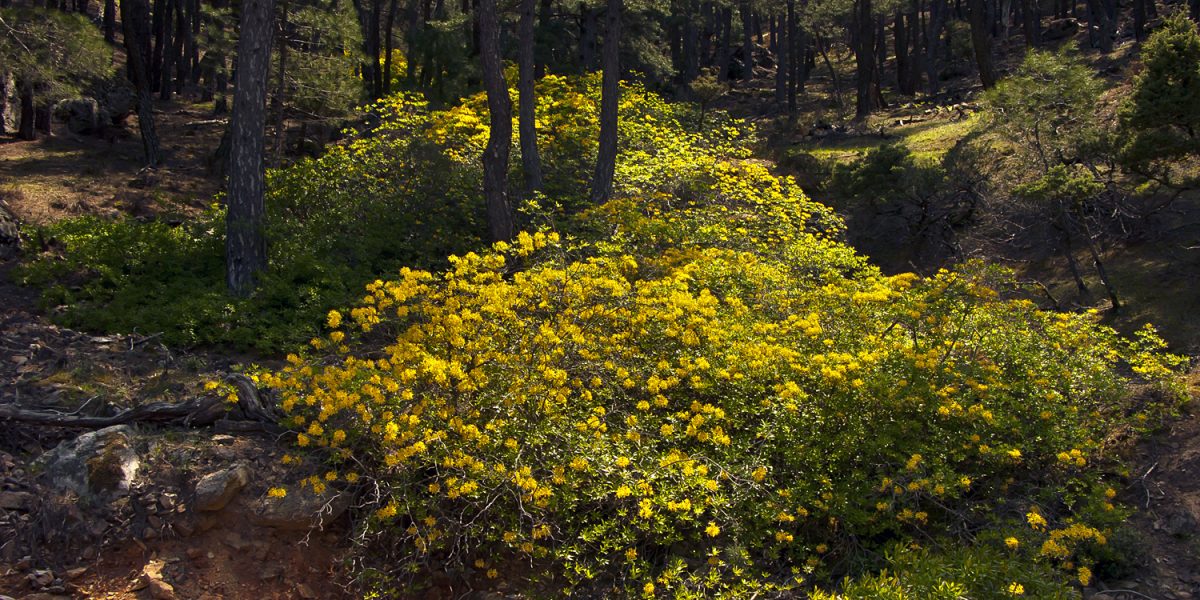
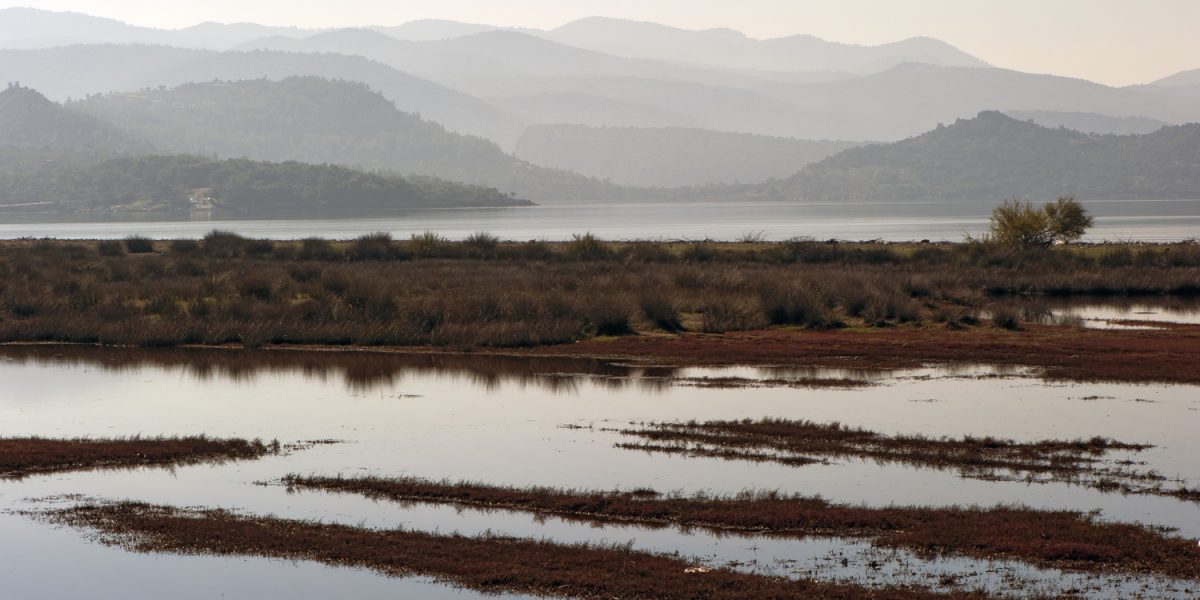
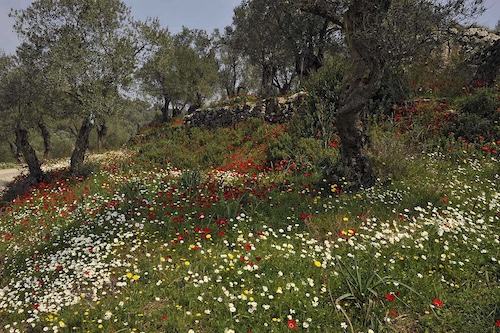
Saying goodbye to a world ruled by a bunch of severely disturbed old men and their so-called ‘allies’ isn’t so bad but saying goodbye to an island that is a garden of Eden, full of the most exuberant seas of flowers, is a bit harder.
Shitty cancer, it’s gnawing at me, but it still lets me enjoy this sparkling spring. Wherever you go, each place is more beautiful than the last. Fields of red anemones reluctantly make way for the famous poppies, whose formations shine like Dutch tulip fields in various places on the island, particularly at Achladeri. In the middle and southern parts of the island, brightly coloured anemones are refusing to budge and generously share their space with purple green-winged orchids (Anacamptis morio), as seen in Asomatos.
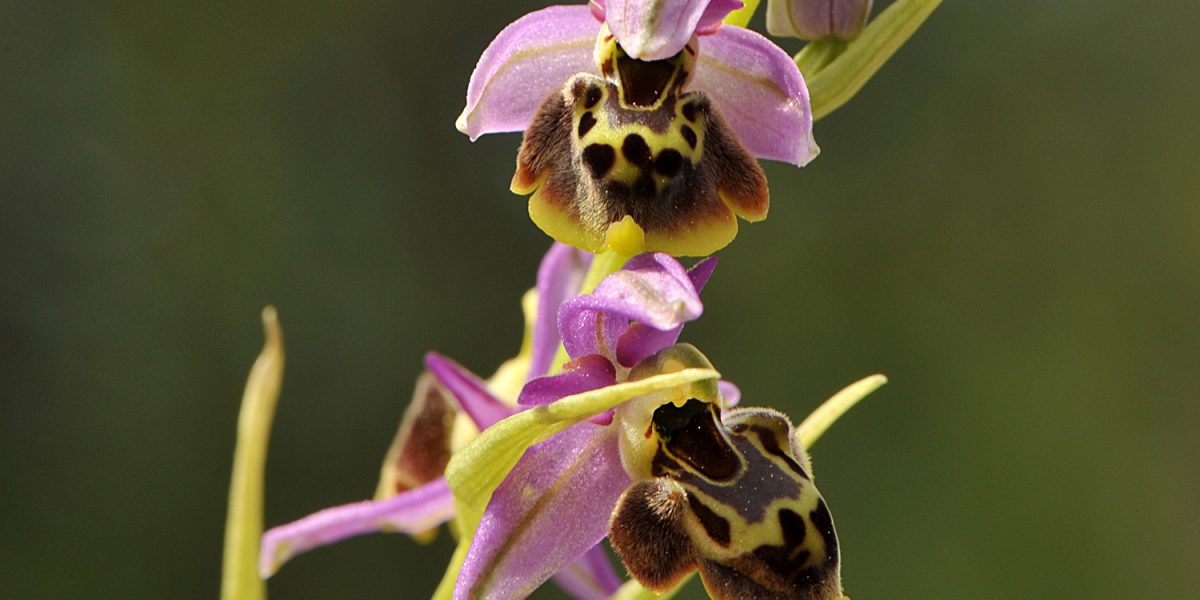
Despite the malignant tumors, I wander like Alice in Wonderland along sandy paths lined with an astonishingly large collection of flowers among grasses and bushes. I doubly enjoy all that beauty. Roadsides explode with yellow asters or white daisies. Pink monkey orchids (Orchis simia) compete with bushes full of rock roses, and Provence orchids (Orchis provincialis) weave carpets under pine trees. The purple/pink Tongue orchids, which I call Picasso orchids due to their angular, abstract shape, have deployed as entire armies and stand like sturdy giants swaying in the wind, like in Palios. Some orchids, particularly from the Ophrys family, do not like gatherings and have to put in a lot of effort to avoid getting lost on roadsides and other places where grasses shoot up as high as the moon.
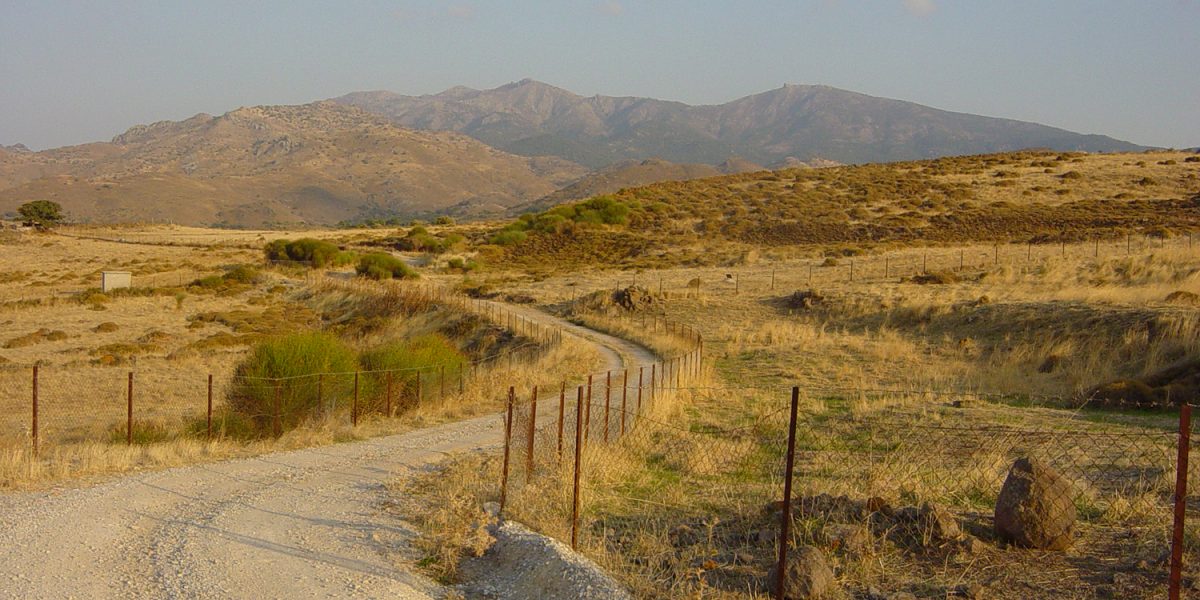
Shitty cancer. No, I can no longer wander for hours over all those exciting hiking trails that crisscross the island, I manage at most half an hour and only without any incline. I cheat quite a few kilometers with the car. Cruising over the island also offers spectacular views. The delicate green of the oak trees, which have so many shades, the bright blossoms that turn the wild apple and pear trees dazzlingly white; they turn the mountain slopes into splendid green paintings.
This year, clover is also present in large numbers, in many astonishingly different shades. This year they seem to have the purpose of colouring as many surfaces as possible: bright yellow, purple, bluish, or white. They are ground covers and provide feed for livestock, for both wild and domesticated animals. I wonder if they can now multiply undisturbed because the sheep and goats are under house arrest. They are no longer allowed to take trips in search of the juiciest bites, because of the foot-and-mouth disease that has the island in its grip.
Shitty disease. All exports have been halted, and the question is where the farmers should go with their milk, because even the cheese factories can’t handle much more. They don’t have enough refrigeration space. You would think they could just let the milk run over the fields. But that won’t work either, because milk is not good for the soil at all. That will acidify the earth; and on this island the farmers extract tons of milk from their goats and sheep.
While the furious farmers have been occupying the port for several days now, allowing only walking passengers, those with urgent need to travel or military personnel on and off the ferries, clover is spreading like crazy across the island, searching for acidic soils. Clover is, in fact, also a soil improver. It binds nitrogen from the air, creates a loose soil, and thus provides nutrients for other plants. Actually, it makes you wonder why synthetic fertilizer has displaced clover.
Shitty cancer. In a way, I now use clover against those voracious tumors. I’m trying to drown them in honey. On the island, there are many different types of honey, such as chestnut and thyme honey, but clover is also popular with the bees. For the first honey of the year, during this bountiful spring they can fill up their honeycombs to the brim with delicious flower syrup. And I too feel the relief when this divine nectar slides down my sore throat: the more, the better. I don’t care if I gain weight like Winnie the Pooh. The cancer will surely snatch the kilos back later on. What remains now is the search for a four-leaf clover.